

The Ultimate Doberman Pinscher Guide: History, Care & Analysis
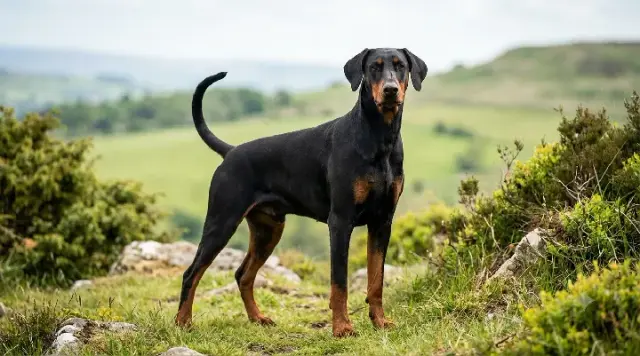 |
| Standing Doberman Pinscher on a Grassy Hill |
Introduction
The Doberman Pinscher is one of the most recognizable, intelligent, and versatile dog breeds in the world. The Doberman was first bred in Germany in the late 1800s by Karl Friedrich Louis Dobermann, a tax collector. The Doberman was originally created in late 19th century Germany by a tax collector named Karl Friedrich Louis Dobermann, with the intent of being a powerful personal protector, loyal companion, and highly mobile working dog. Dobermans have an elegant and powerful look, with a very sleek silhouette and a muscular frame. Their dark eyes are expressive, and they are alert and ready to go. Their reputation has grown from their ferocious guard dog days of yesteryear to their days of being dependable working partners for military and police organizations, and family members as well. To grasp the entirety of the Doberman Pinscher, it is vital to also take a look at their complicated history, physical qualities, psychological character, training requirements, health and wellness, and function in contemporary families.
Analysis:
The introductory framework emphasizes the inherent contrast of the Doberman Pinscher: as formidable as a guard dog, he is so kind and affectionate a house dog. On the behavioral side, this balance is the reason why the breed needs to be socialized in an organized manner, early in life. Looking back at the past, it is clear that they were chosen for their physical and mental capabilities, making them ideal for tasks in which they are put to use today.
Read About: The Ultimate Guide to Rottweilers: Breed History & Care
History and Origin
The history of the Doberman Pinscher starts in the town of Apolda in the state of Thuringia, Germany, at the beginning of the 19th century. Karl Friedrich Louis Dobermann was the local dog pound keeper, night watchman, and tax collector. Considering the dangers of his job, the carrying of the pit of money through unsafe places, he wanted to create a dog that was most fit for his work: a "working dog" that would provide protection, physical strength, stamina, and exceptional brain power. While exact records were not kept, dog historians are sure that several different breeds were used in the crossing to create the Dobermann. Some of these were German Pinschers, Rottweilers, Beaucerons, Manchester Terriers, and Weimaraners. Since the death of Louis Dobermann in 1894, German breeders have been continuing to improve this line, which they feel should be fast, agile, and with a well-balanced physique, with the protective traits not being compromised. In Germany, by 1899, the National Doberman Pinscher Club was formed, and the Doberman Pinscher was officially recognized by the American Kennel Club (AKC) in 1908.
Analysis:
By studying the history of the development of the Doberman, it is possible to understand the reasons behind the combination of working traits that the Doberman possesses. The combination of endurance and size of the Rottweiler, plus the fast reaction time of the German Pinscher, resulted in a very athletic animal capable of high-intensity performances. Historical breeding from an aggressive to a responsive type is the result of modern standards, which are based on the control of aggression while removing indiscriminate reactivity.
Read About: Belgian Malinois Dog: Traits, Training, Care & Complete Guide for Owners
Physical features and body form
A medium to large, compact, square dog, the Doberman Pinscher is characterized by speed, agility, and power. The males are 26-28 inches (66-71 cm) in height at the shoulder, and 75-100 pounds (34-45 kg); females are 24-26 inches (61-66 cm) at the shoulder and 60-80 pounds (27-36 kg). The body is characterized as having a wide chest, a tucked abdomen, a sturdy back line, and solid leg bones, which are designed to carry stamina with ease. The head is long, narrow, and wedge-shaped. The jawline is strong, and the mouth is tight.
They have smooth, short, firm, and thick coats that lie close to the body. The official coat colors are generally:
Black and Rust: The classic color scheme of black with rich rust colors above the eyes, on the muzzle, chest, legs, and under the tail.
Blue and Rust: Dilute – black coat with rust points as usual.
Red and Rust: Chocolate to copper with rust markings.
Russet: A light tone of rust. Fawn (Isabella): A light red hue, or red with a silvery-beige coloration, with rust spots.
In historical times, it was common practice to cut the ears straight up to prevent damage in working operations and to cut the tail so that an animal would not become entangled in its tail. With improved standards for many breeds and animal welfare legislation, natural drop ears and full tails have become more prevalent these days.
Analysis:
In terms of its physiology, anatomically, it's a Doberman that can excel at short bursts of speed and long-lasting endurance. The design of the sleek coat is designed to produce less drag and provide little insulation in the event of cold weather, but make grooming both easier and more complex. There are specific physiological implications for each of the color variations, as well as a risk of specific color dilution alopecia (CDA), which must be catered for in skin care management; the forms of color dilution in particular (blue and fawn).
Also Read: German Shepherd Dog: Traits, History, Care & Utility Guide
Temperament and Psychological profile explain how the dog's personality is developed
A well-bred Doberman Pinscher is not a dog that is aggressive or unpredictable, like some media would have you believe, but rather a very intelligent, highly trainable, alert, and very loyal dog to his/her family. One of the smartest dog breeds in the world, Dobermans have an exceptional problem-solving ability and are capable of learning complex command structures. They bond deeply with their handlers and are sometimes called “Velcro dogs” because they wish to be physically close to their human.
Reserved or watchful towards strangers, they are usually careful watchdogs, being naturally cautious. A balanced Doberman has a very emotional intuition, becoming attuned to real threats quickly and distinguishing peaceful interactions. A lack of mental challenge and boundaries, coupled with their high energy and sharp mind, can result in territorial overreactivity, anxiety, or destructive habits.
Analysis:
Dobermans are very aware of their surroundings, psychologically. They have a working past and are always on the lookout for change or movement. This hyper awareness is great when they are guarding, a good dog, but needs constant human handling to avoid hyper-vigilance or anxiety. Their loyalty is definitely linked to their demand for a structured common order inside the family.
Read About: Bullmastiff Dog Breed Guide: History, Traits, and Care
Exercising and mental stimulation requirements are included
The Doberman Pinscher is an extremely active dog that demands daily exercise as well as mental challenges. An adult Doberman needs 60 to 90 minutes of running daily; a stroll on a leash is not enough. Suitable activities include:
Secure (fenced) off-leash running.
Agility training, flyball, and obedience trials.
Interactive fetch and tracking games.
Running, hiking, or walking behind a bike with a dog.
It is also important to engage the brain in activities to avoid boredom. Dobermans are highly motivated to solve puzzles, learn advanced tricks, go on scent trails, and do Schutzhund/IGP (German Protection). If they don't have a physical or mental outlet, Dobermans tend to become troublesome with excessive barking, compulsive chewing, or stereotypic behaviors.
Analysis:
The Doberman's working-dog physiology directly affects the energy requirements of the dog. Exercise is an important way to consume extra adrenaline and decrease cortisol. The behavioral management point of view is that physical exercise exhausts the body, whereas cognitive work is a stimulus to the brain. A balanced mix of both results in a stable and obedient domestic pet.
Training and Socialization Protocol
The best time to start training a Doberman Pinscher is in early puppyhood, from the age of 8 to 16 weeks old. Stubborn behaviors later in life are prevented by learning good manners early, given their quick learning capacity and physical strength. Positive reinforcement, consistency, clear boundaries, and mutual respect are central components of effective training methodologies. If the dog is not handled in a way that doesn't provoke distrust, they are likely to become defensive and distrustful. Dogs won't trust if they are treated in a harsh manner or if the trainer is physically dominant.
The puppy needs exposure to a variety of people, animals, places, urban noises, and surfaces in an unthreatening way during early socialization. A complete training program comprises the following:
Basic Obedience: Sit, Stay, Recall, Heel, Place.
Leash Manners: To develop loose-leash walking, teaching them to manage their own strength.
Impulse Control: Delaying actions prior to eating, going through a door, or picking up toys.
Familiarize: Paws, ears, and teeth handled regularly for veterinary care and grooming.
Analysis:
Socialization has a direct impact on the way a Doberman's protective instincts manifests itself in adulthood. Early and general exposure allows the dog to learn that everyday stimuli are harmless and only react to abnormalities. Positive reinforcement takes advantage of their tendency to please, encouraging positive behaviors through reward systems, and not through fear.
Health Concerns and Preventive Care
Doberman Pinschers are healthy, athletic dogs, but the breed has a number of significant health issues that are genetically passed down. Good owners and breeders make health testing a priority and work to prevent these problems.
Dilated Cardiomyopathy (DCM): A severe heart muscle disease that causes the heart chambers to expand, and sometimes the heart to fail. Annual echocardiograms should be performed, and routine troponin-I testing is indicated.
An acquired blood-clotting condition in which blood coagulates less than normal and can lead to excessive bleeding, particularly from minor injuries or surgery, due to a lack of the protein von Willebrand's factor (vWF). Blood tests can be used for screening of this trait.
Gastric Torsion (Bloat): This is a serious disease that occurs when the stomach gets full of air and turns over. Reduce risk by using slow-feeder bowls and limiting vigorous activities after feeding.
Cervical Spondylomyelopathy (Wobbler Syndrome): A neurological condition characterised by wobbly gait and neck pain, which occurs in the cervical spine.
Arthritis of the hip: Malformation of the hip joints that may develop into painful arthritis; it can be managed through diet and joint supplements.
Hypothyroidism: Thyroxin deficiency, causing weight gain, skin problems, weakness, and lethargy, is easily treated with a daily dosage of the hormone.
With good veterinary care, proper nutrition, and regular fitness training, a Doberman Pinscher can live 10-12 years.
Analysis:
Health management in Dobermans should move away from treatment and towards prevention. Genetic screening gives prospective owners the choice to select puppies from healthy lines, and regular diagnostic checks, such as Holter monitoring for the diagnosis of DCM, give early intervention. If important environmental risk factors are reduced, including preserving optimal body weight, the stress on the joints and cardiovascular system is greatly reduced.
This course covers the nutritional needs and dietary management of patients.
High-energy dogs such as the Doberman will need a nutritious, balanced diet that is rich in nutrients and designed based on their age, weight, activity, and metabolism. The health of the coat, muscle, energy, and joint health is all influenced by diet quality.
Dietary Component Breakdown
CHOLESTEROL PROTEIN (Source: Eggs, Organ Meats): Aids in cholesterol absorption.
Healthy Fats (Source: Chicken fat, Salmon oil, Flaxseed): Provides long-lasting energy and helps to keep skin and coat healthy.
Complex Carbs (Source: Sweet potatoes, Brown rice, Oatmeal): Provides long lasting, digestible glucose for energy.
Micronutrients (Omega-3 & Omega-6 fatty acids): Suppresses systemic inflammation and helps maintain joints.
Adults dobermans should be fed two or three smaller meals throughout the day to decrease the possibility of bloat. Supply of clean fresh water should be kept at all times.
Analysis:
The Doberman's metabolism is so high that they require the right amount of nutrients just to sustain their high energy output. These high protein proportions help to maintain their thick muscled bodies, and the low fat content limits the risk of excess fat, which may aggravate their genetic predisposition to hip dysplasia and heart problems. Dividing meals helps to regulate the digestive system's actions and prevents excess gas build-up, directly addressing the issue of gastric torsion.
Grooming & General upkeep
The Doberman Pinscher breed's short single coat makes grooming simple. But regular attention is required to ensure skin integrity and good hygiene.
Coat Care: Brush weekly using a rubber curry brush or hound glove to soften and encourage the production of oils in the skin. Unless the dog gets into trouble, baths are only needed every 6-8 weeks.
Nail Trimming: Nails that grow out should be trimmed or ground down periodically every 2-3 weeks. LONG NAILS can cause discomfort in the joints and change the way your paw walks.
Dental Hygiene: Brush your dog's teeth every day or every three days with a safe doggie toothpaste, which can help prevent oral health issues such as periodontal disease or plaque.
Ear Cleaning: Clean weekly ears with a veterinarian-approved ear cleaning solution. Be gentle with ear cleansing.
Analysis:
When it comes to coat care, there is no such thing as too little. Grooming can be a great time for a physical check of the dog, enabling owners to detect early signs of lumps on the skin, allergic reactions, or localized pain. Handling often during grooming reinforces the handler's bond and develops cooperative medical behaviors.
The Doberman in the Family and Utility Roles
The Doberman Pinscher is very adaptable and is a highly capable dog in many environments. As a part of the family, they are loving and attentive pets who will form a strong attachment with children if properly socialized and cared for. They have a strong sense of intuition, which helps them blend in well with the family life, as long as their physical and mental requirements are satisfied.
Dobermans are still very successful in key modern roles in working environments:
Police and Military K-9 Units: Assistance in tracking, locating, and apprehending suspects, and area patrol work.
Search and Rescue (SAR): Their agility, their sense of smell, and their drive to rescue anyone or anything they can in disaster areas.
Service and Therapy Work: High empathy and attention skills, working with people who need mobility assistance dogs, psychiatric service, and emotional support dogs.
Analysis:
The versatility of the breed is due to its ability to be active on one task and cuddly on another. They have succeeded in diverse roles and successfully adapted to various problems to meet human needs, which means that their intelligence is not only obedience but also has adaptive problem-solving ability.
Conclusion
The Doberman Pinscher is a remarkable result of grace, strength, intelligence, and loyalty. They have demonstrated their utility in a variety of settings, from being a committed protector in 19th century Germany to today, being a valued family member or service dog, and performing their duties. Owners of a Doberman must be people who have experience with the breed, are active, and are willing to work hard and are dedicated to training, exercise, good health care, and early socialization of their Doberman. The Doberman Pinscher is a masterpiece of canine breeding; for anyone willing to accept him as their companion, protector, and devotee, there is no one more loyal than the Doberman.
Essential Products for Your Doberman Pinscher: To maintain your dog's health, coat, and overall strength, choosing high-quality essentials is key. Below is a quick comparison of top-recommended products tailored specifically for their nutrition, grooming, and joint support.
| Product Name | Best For | Key Feature | Price & Deal |
|---|---|---|---|
| Royal Canin Large Adult Dry Dog Food | Daily Nutrition | Targeted Joint & Skin Health | View on Amazon |
| Furminator Undercoat Deshedding Tool | Grooming | Reduces Loose Hair up to 90% | View on Amazon |
| Bedsure Large Orthopedic Dog Bed | Joint Support | High-Density Egg Crate Foam | View on Amazon |


0 Comments